Block Out Level 13 Walkthrough
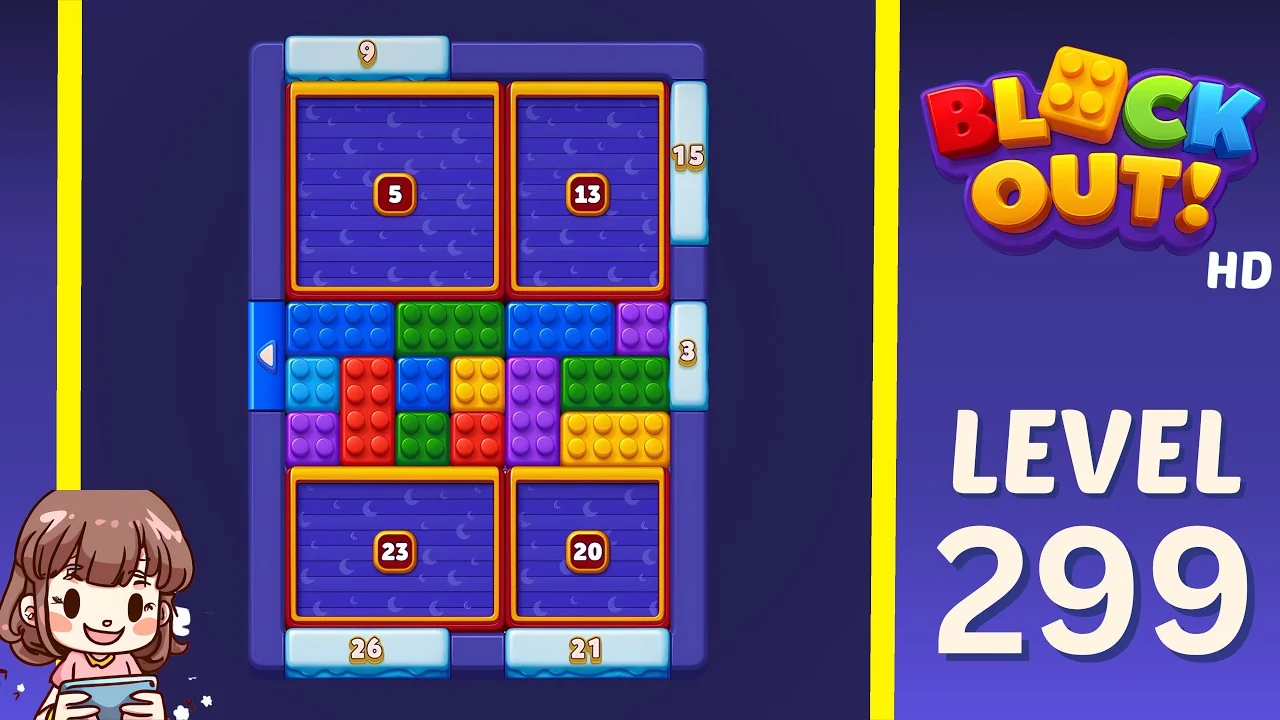
BeginnerMeasured from the Level 13 image on this page, the sampled board breaks down into 7 main colours: orange (27.0%), blue (18.4%) and pale blue (18.1%), plus 4 other colours. The dark board background covers 8.7% of the sample; it reads as empty space or mechanism panels rather than as a coloured block.
Level screenshot
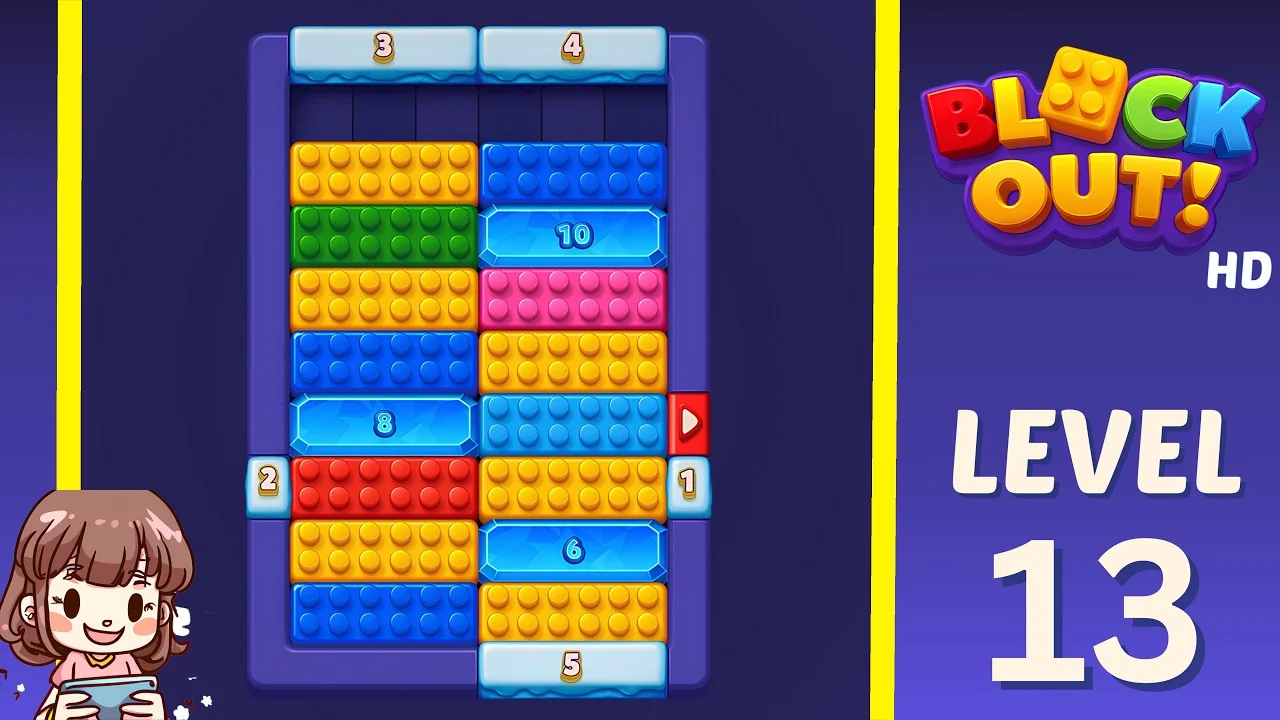
What the Level 13 board is made of
Measured from the Level 13 image on this page, the sampled board breaks down into 7 main colours: orange (27.0%), blue (18.4%) and pale blue (18.1%), plus 4 other colours. The dark board background covers 8.7% of the sample; it reads as empty space or mechanism panels rather than as a coloured block.
- Sampled colours
- 7
- Sample coverage
- 79.1%
- Empty sample rows
- 2
- Colour groups
- 36
The sample covers 79.1% of a 20x28 lattice: 7 colours, 2 empty rows and 36 separate colour groups.
orange 27.0% of the sample
Spread across the sampled board rather than parked in one corner.
blue 18.4% of the sample
Spread across the sampled board rather than parked in one corner.
pale blue 18.1% of the sample
Spread across the sampled board rather than parked in one corner.
red 11.1% of the sample
Concentrated in the central half of the sample, so these pieces have to cross the busiest lanes.
light blue 7.4% of the sample
Sits almost entirely on the outer rim, where the door slots are. Treat it as a rim or door colour rather than another block group.
green 6.6% of the sample
Spread across the sampled board rather than parked in one corner.
deep green 2.7% of the sample
Spread across the sampled board rather than parked in one corner.
navy 8.7% of the sample
Dark board backing — empty cells or mechanism panels, not a coloured block.
Read from the board image on this page, last measured 2026-10-19. Percentages are shares of the sampled board; the sample grid is not the game's exact cell grid.
How to read this board
Start from the largest colour: orange
Orange covers 27.0% of the sampled board — more than any other colour. It has the most pieces to route, so clear it early once its door is reachable instead of leaving it until the board is tight.
Protect the middle: red
Red sits mostly in the central half of the sample. Moving it will cross routes other colours still need, so keep that part of the board as clear as the level allows.
Rim colours are doors, not extra blocks
light blue appear almost only on the outer rim. They mark door slots or trim; do not count them as another group of pieces to clear.
The board starts crowded
Only 8.7% of the sample is dark background. With little spare space, every parked block costs a lane; plan two or three moves ahead before sliding into the centre.
How the Level 13 clear works
The sample fills 79.1% of its 20x28 lattice and splits into 7 colours and 36 groups. The pieces are spread across the sampled rows (31.4% top, 36.1% middle, 32.5% bottom) rather than stacked in one band. Pale blue is the most divided colour, with 9 separate groups in the sample. Space is shared, so the order matters more than the speed: a block parked in a doorway can wall off another colour completely.
Level 13 sits in the Beginner tier and in the 1–40 block of this guide. Early boards introduce one idea at a time: match the door color, follow the lane, and keep the path back open. Treat them as a tutorial for route planning rather than a race. The sample has 2 empty rows and no full-width corridor, so spare space is limited.
Strategy note 1
With only 2 empty rows in the sample, every move has to open the next one. Plan two moves ahead before sliding into the middle.
Strategy note 2
Pale blue is split into 9 groups. Clear the group closest to its door first; the far groups stay blocked until that run is finished.
Strategy note 3
79.1% of the sampled lattice is covered. At that density one parked block can close the only route to a door.
Strategy note 4
If two colours are split into several groups, finish the smaller colour first so it stops competing for lanes.
Strategy note 5
Clear the edge pieces before the middle ones; the centre is where every route has to cross.
These notes combine the measured 7-colour sample with the beginner mechanics, not a move-by-move transcript. The video above is the exact clear for this board.
Block Out Level 13 — frequently asked questions
- What colours are on the Block Out Level 13 board?
- The board image on this page breaks down into 7 main colours: orange (27.0%), blue (18.4%), pale blue (18.1%), red (11.1%), light blue (7.4%), green (6.6%), deep green (2.7%). The names are read off the measured hex values shown beside each swatch, so they can differ from the name the game gives the same block.
- Which colour covers the most of the Level 13 board?
- Orange is the largest measured colour at 27.0% of the sample. That makes it the colour with the most pieces to route, so it is usually the one worth clearing early once its door is open.
- How much of the Level 13 board is empty?
- The dark board background covers 8.7% of the sample. It can include empty cells and mechanism panels, so read it as spare backing area rather than a count of free moves.
- Does the board image show the order to move the blocks?
- No. A still image shows the colours and their layout, but not the block queue or the order the game offers. The video on this page is the exact clear; the measured breakdown is what the board costs to clear, not a tap-by-tap order.
- How is the Level 13 board laid out?
- The sample fills 79.1% of its 20x28 lattice and splits into 7 colours and 36 groups. The pieces are spread across the sampled rows (31.4% top, 36.1% middle, 32.5% bottom) rather than stacked in one band. The sample has 2 empty rows and no full-width corridor, so spare space is limited.
- What difficulty is Level 13 in Block Out?
- Level 13 is rated Beginner difficulty in Block Out! - Color Sort Puzzle. Tiers run from Beginner (1-99) through Intermediate (100-249) and Advanced (250-449) to Expert (450 and up).
- Is there a video walkthrough for Block Out Level 13?
- Yes — the video on this page plays the complete clear of this board, so you can follow the block routes in real time.
- Why do I get stuck on Block Out Level 13?
- Most jams on Level 13 come from opening a second colour before the first is off the board. The sample holds 7 colours split into 36 groups, so every extra front costs a lane. Clear one colour at a time, keep the middle open, and treat the edges as waiting space.
- Does Block Out work offline?
- Yes. Block Out! - Color Sort Puzzle can be played offline once installed — there are no online requirements during normal play.
More beginner walkthroughs
View all →
Featured walkthroughs
The most-watched levels plus selected late-game boards - each with a full video guide.